|
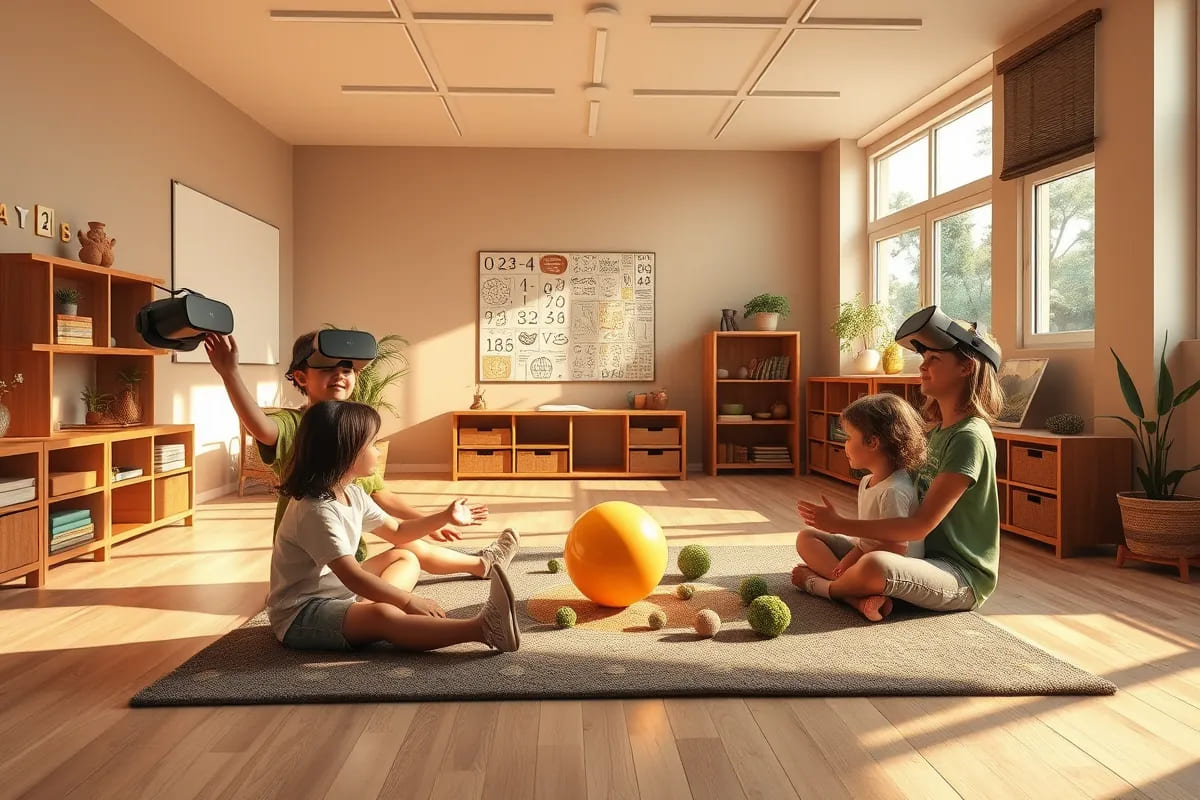
Once confined to science fiction, immersive technology is now stepping into classrooms around the world. Extended Reality—an umbrella term covering Virtual Reality (VR), Augmented Reality (AR), and Mixed Reality (MR)—is transforming how we teach, learn, and understand the world.
This isn’t just about replacing textbooks with headsets. It’s about reimagining the entire educational experience—blending digital content with the real world to create deeper, more meaningful learning. XR isn't the future of education; it's the now.
Learning by Doing—Virtually
Traditional classrooms often rely on lectures, slides, and static images. XR flips this model, allowing students to interact with 3D objects, walk through historical events, or simulate science experiments that would otherwise be too dangerous, expensive, or impossible.
AR overlays information onto the real world. Imagine pointing a tablet at a frog and watching its organs labeled in real time.
VR creates full immersion. Students can explore the solar system or ancient Egypt without leaving their desks.
MR bridges the two—allowing digital objects to interact with the physical world, like manipulating a molecule floating in your actual lab.
This kind of embodied learning helps students experience knowledge rather than just consume it.
From Kindergarten to Med School
XR isn’t limited to a specific age group or subject:
Elementary Schools are using AR to make reading interactive and math problems spatial.
High Schools employ VR for virtual field trips—visiting the Great Wall of China or the inside of a human heart.
Universities and Vocational Programs use XR for advanced simulations—from engineering to surgical procedures.
Even soft skills training—like public speaking or conflict resolution—is benefiting from virtual role-play environments.
Accessibility and Equity in Focus
XR has the potential to level the educational playing field. Students in underserved areas can access the same high-quality simulations as those in elite institutions. Language barriers can be overcome with real-time translation. Physical disabilities can be accommodated with customizable environments.
However, there's still a gap in access to devices and internet infrastructure. The challenge now is making XR inclusive and affordable at scale—not just a luxury for high-tech schools.
The Teachers’ Role is Evolving
XR doesn’t replace teachers—it enhances their role. Educators become facilitators of discovery, guiding students through immersive experiences and helping them apply what they learn. The classroom becomes a collaborative space where curiosity leads the way.
Training teachers to use XR effectively will be just as important as the technology itself. Platforms like ClassVR, zSpace, and Meta’s Quest for Education are already offering support tools and lesson plans tailored to different curricula.
Ethical and Emotional Considerations
With great immersion comes great responsibility. Questions are emerging about screen time, data privacy, and emotional impact. How do we ensure virtual environments are safe and age-appropriate? What happens if students become too attached to digital spaces?
These concerns call for clear ethical standards, thoughtful design, and human oversight.
Final Thoughts
XR is more than a tech trend—it’s a new language for learning. By blending digital and physical realities, it taps into the natural way we understand the world: through experience, interaction, and emotion.
As XR continues to evolve, so will the way we teach and learn. And that’s not just revolutionary—it’s transformative.

Nina Alvarez
Extended Reality
84k
2778
324
Similar News



Podcasts
AI Revolution
AI Barriers
TechTalk AI
AI Conversations
Resources