|
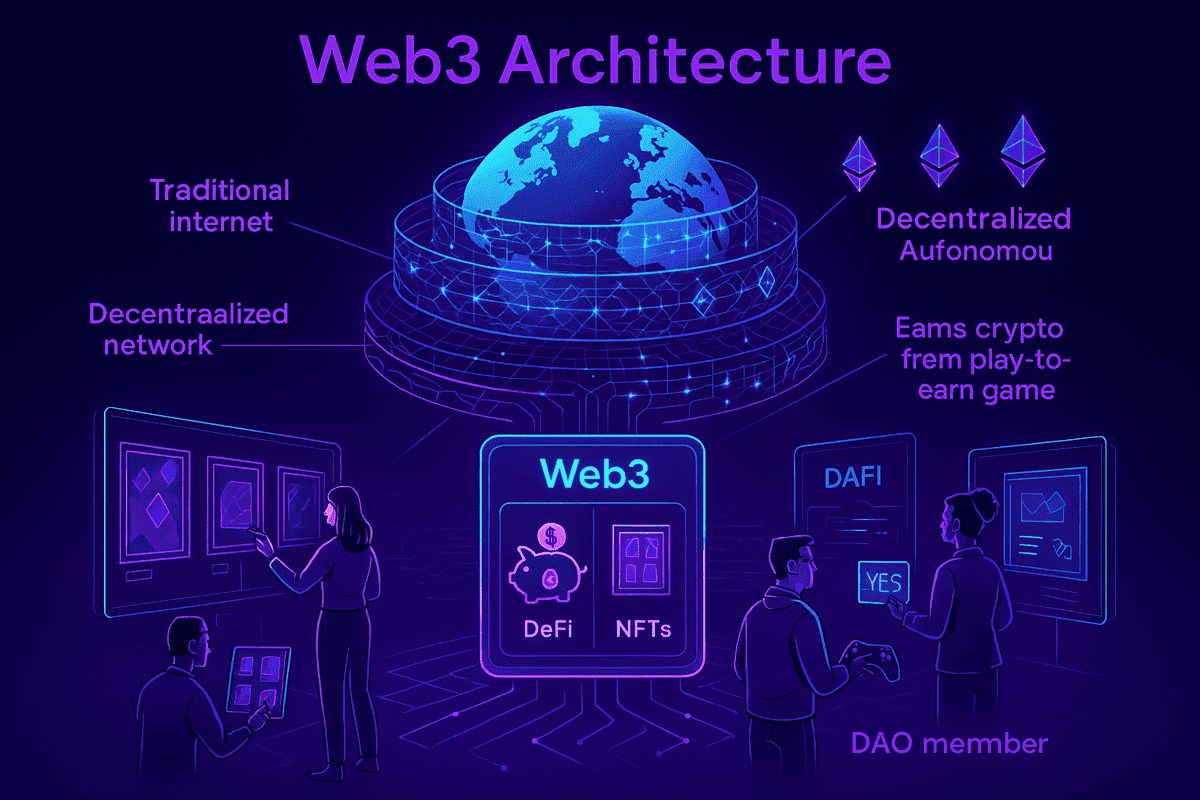
A few years ago, Web3 burst onto the scene, hailed by tech visionaries as the next evolution of the internet—one that would return power to users, disrupt Big Tech, and decentralize everything. To some, it sounded like a marketing term. To others, a revolutionary concept. Today, Web3 is no longer just a buzzword—it's a rapidly evolving framework that is reshaping how we think about data ownership, digital identity, and the future of the web.
The Evolution of the Web: Web1, Web2, Web3
To understand Web3, we need to zoom out. The internet has evolved in phases:
Web1 (1990s–early 2000s): A read-only experience. Websites were static, content was limited, and interaction was minimal.
Web2 (mid-2000s–now): The era of social media, mobile apps, and user-generated content. It brought convenience—but at a cost: centralized platforms began harvesting and monetizing user data.
Web3: A decentralized, user-owned internet built on blockchain technology. In this vision, you own your data, digital assets, and online identity—and you’re rewarded for your participation.
What Makes Web3 Different?
At its core, Web3 is powered by blockchain—a decentralized ledger that allows transparent, secure transactions without intermediaries. But it's more than just crypto and NFTs.
Ownership: In Web3, your data, content, and digital assets belong to you, not tech giants.
Tokenization: Users can earn tokens (cryptocurrency) for contributing to platforms, like creating content or curating information.
Interoperability: Your Web3 identity can travel with you across platforms, breaking the silos of Web2.
Decentralized Apps (dApps): Instead of relying on centralized servers, dApps run on peer-to-peer networks, reducing single points of failure.
Real-World Use Cases
Web3 is finding traction in diverse sectors:
Finance: DeFi (Decentralized Finance) platforms like Uniswap and Aave allow users to trade, borrow, and lend assets without banks.
Content Creation: Platforms like Mirror and Lens Protocol let writers and creators monetize their work directly through crypto.
Gaming: Play-to-earn models reward players with tokens they can trade or cash out—unlike traditional games where rewards stay locked in.
Identity: Projects like ENS (Ethereum Name Service) give users blockchain-based identities, replacing centralized usernames and passwords.
These aren’t just ideas—they’re functioning ecosystems with growing user bases.
The Promise—and the Pushback
Web3 promises a digital world where users are in control. But it also comes with growing pains:
Scalability: Many blockchain networks are slow and expensive, although solutions like Layer 2 chains are improving this.
UX Challenges: Web3 tools often require technical know-how. Wallets, gas fees, seed phrases—it’s a steep learning curve.
Regulatory Uncertainty: Governments are still catching up with how to regulate digital assets and decentralized platforms.
Speculation & Hype: Like any emerging tech, Web3 has attracted hype-driven projects and scams, undermining trust in legitimate innovation.
Beyond Crypto: A New Internet Philosophy
Perhaps the most profound aspect of Web3 is philosophical. It challenges who gets to control the internet. For decades, we've traded convenience for control—allowing a handful of platforms to dictate our digital experiences. Web3 flips that model. It introduces transparency, consensus, and community governance as core design principles.
It’s less about replacing Web2 and more about creating alternatives—where users have choices, autonomy, and economic upside.
Preparing for a Decentralized Future
Web3 isn't fully here yet, but it's arriving fast. Developers, designers, creators, and investors are building the infrastructure for the next digital era. Communities are forming around protocols, not just platforms. And conversations are shifting—from hype to substance.
As Web3 grows, we’ll need more education, better interfaces, smarter regulation, and a focus on long-term value over quick wins. But the foundational shift has already begun.
Final Thoughts
Web3 may have started as a buzzword, but today it's becoming a blueprint for a more open, equitable, and user-empowered internet. By decentralizing control and redefining ownership, it’s asking us to rethink everything we know about digital life—from finance to identity to creativity.
The tools are still emerging, and the road ahead will be messy. But one thing is clear: Web3 is not just a trend—it’s a movement. And its impact will shape the future of the internet for generations to come.

Ivy Zhang
Blockchain
16k
200
121




Podcasts
AI Revolution
AI Barriers
TechTalk AI
AI Conversations
Resources