|
In today’s world, a single tweet can spark global panic—or spread a dangerous lie. Fake news has become one of the most urgent challenges of the digital age, eroding trust in institutions and fueling confusion at scale. But as misinformation grows more sophisticated, so does the technology fighting it.
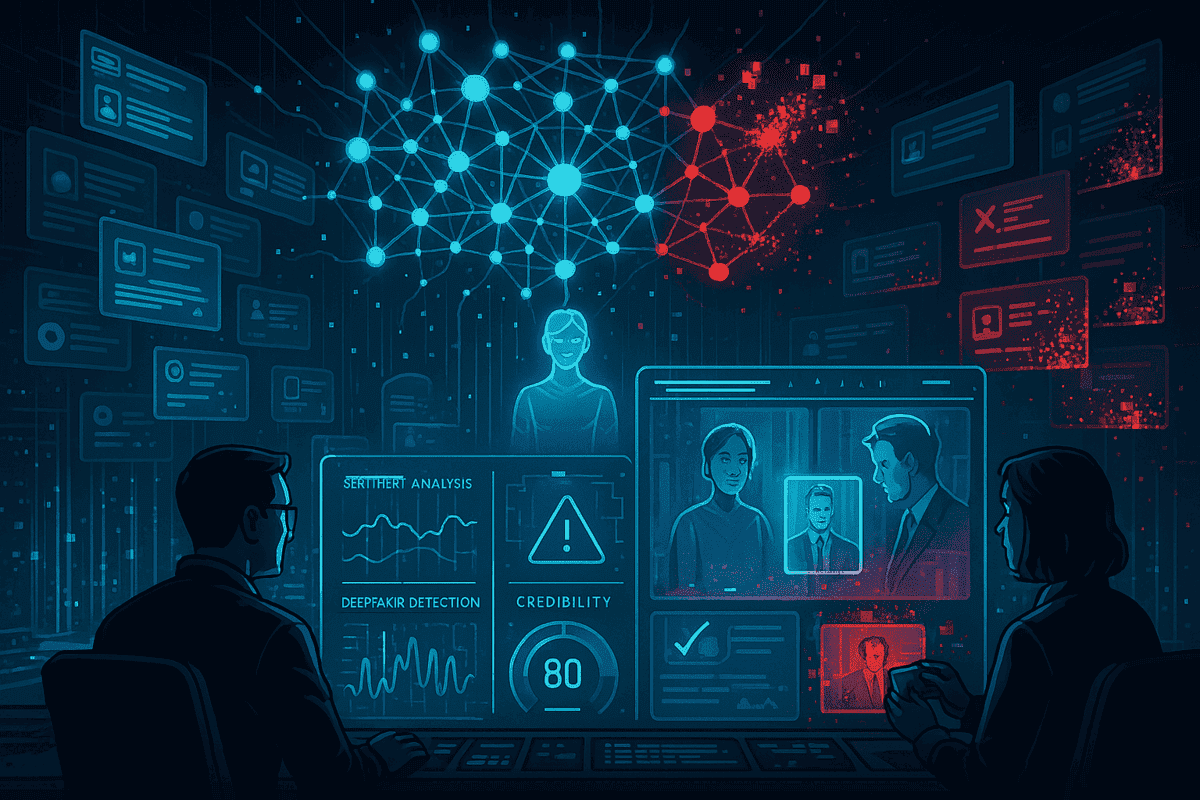
Enter Artificial Intelligence (AI). No longer just a buzzword, AI is emerging as a powerful force in the battle against digital deception. From deepfake detection to semantic analysis, intelligent systems are being trained to sniff out misinformation with speed and precision once impossible.
So, how exactly does AI “read between the lines”?
Why Fake News Is So Hard to Detect
Unlike obvious spam or phishing links, fake news often mimics real reporting. It may contain partial truths, emotional language, or manipulated media. What makes it so dangerous is also what makes it so effective—it feels real.
This is where AI offers an edge. With the ability to process millions of articles, posts, and videos at scale, machine learning models can begin identifying patterns and signals invisible to the human eye.
How AI Detects Misinformation
AI systems are trained using datasets of verified fake and real news stories. From there, they begin to “learn” the subtle differences between trustworthy and deceptive content. Here’s how:
Natural Language Processing (NLP): AI analyzes sentence structure, grammar, tone, and keywords. Sensationalist language or emotional triggers are red flags.
Fact-checking Models: AI compares claims in an article to verified databases or trusted sources to evaluate their accuracy.
Image and Video Forensics: Computer vision tools can detect manipulated visuals, inconsistencies in lighting, shadows, or pixel patterns—especially important for deepfakes.
Source Credibility Analysis: Algorithms assess the reliability of the domain or author based on past content and bias scoring.
Network Behavior Tracking: Some systems identify how fast and where content spreads. Fake news often follows different virality patterns than genuine stories.
Real-World Applications
AI is already being deployed across multiple platforms to stop misinformation in its tracks:
Facebook and X (formerly Twitter) use AI to flag potentially harmful content for human review.
Google’s Fact Check Tools use AI to display claim reviews alongside news results.
Microsoft’s Project Origin works on authenticating media with blockchain-like traceability.
AI-powered plugins like NewsGuard and Trusted News help users evaluate source credibility in real time.
The Ethical Gray Zone
As promising as this sounds, AI-based moderation also raises serious questions:
Who trains the AI? Bias in training data could lead to censorship or unfair labeling.
What happens to freedom of speech? If AI suppresses certain views, where’s the line between moderation and control?
Can fake news evolve faster than AI can adapt? As misinformation techniques evolve, so must detection systems.
Transparency in how these tools are built—and clear guidelines for their use—will be critical in maintaining trust.
Empowering the Human + Machine Duo
AI can do the heavy lifting, but media literacy is still a human responsibility. Knowing how to question sources, analyze bias, and verify information remains essential.
Think of AI as the radar. It alerts us to possible storms—but it’s still up to us to decide when to take shelter.
Final Thoughts
Fake news isn’t just a technical problem—it’s a societal one. But by combining human judgment with AI-powered insight, we can start to tip the balance.
In this new media age, truth may no longer be self-evident. But with smart tools, ethical design, and informed users, we have the means to find it—and defend it.

Malik Johnson
Artificial Intelligence
67k
753
54
Similar News





Podcasts
AI Revolution
AI Barriers
TechTalk AI
AI Conversations
Resources